
What's on Our Autumn Nursery Menu? Our Approach to Nutrition
Our autumn menu runs on a four-week rotating cycle, planned with regard to the Department for Education's Early Years Foundation Stage nutrition guidance. Every day includes a morning snack, lunch, afternoon snack and tea, balancing starchy carbohydrates, fruit and vegetables, dairy, and a varied range of protein sources including chicken, beef, fish, eggs, lentils, chickpeas and beans. Meals are freshly prepared, lower in salt, and served in age-appropriate portions and textures. Below is a look at what a typical week looks like, along with how we plan portions, drinks and food safety.
Food is one of the things parents ask us about most, particularly when a child is starting nursery for the first time. We want you to know exactly what your child will be offered, not just that it is "healthy," so this article walks through our actual autumn menu and the thinking behind it.
How we plan our autumn menu
Our four-week menu has been planned with regard to the Department for Education's Early Years Foundation Stage nutrition guidance and the EYFS requirement that food and drink provided to children is healthy, balanced and nutritious.
The menu provides a varied balance of starchy carbohydrates, fruit and vegetables, dairy foods and alternative sources of calcium, and a broad range of protein and iron sources including chicken, lean beef, eggs, lentils, chickpeas, beans and fish. Fish choices are varied across the four-week cycle and include salmon, white fish, tuna and mackerel. Plant-based protein sources such as lentils, chickpeas and beans are included regularly alongside meat, fish and eggs.
Meals are prepared without unnecessary added salt, using reduced-salt or no-added-salt products where possible, and highly processed foods are kept to a minimum. Food is prepared and served in age-appropriate sizes and textures, taking account of choking risks, allergies, intolerances, individual dietary requirements and each child's developmental needs. Water is freely available throughout the day.
A sample week from our autumn menu
Here is what a typical week on our menu looks like. The menu rotates on a four-week cycle, so the same structure repeats with different meals through the term.
Across the other three weeks of the cycle, children are offered dishes such as roast chicken dinner, lentil and vegetable shepherd's pie, beef and vegetable stew, homemade fishcakes, chicken tikka-style curry, salmon and broccoli pasta bake, three-bean and vegetable chilli, chicken and vegetable pie, beef meatballs in hidden-vegetable tomato sauce, chicken, leek and potato casserole, and a white fish and salmon fish pie, alongside a similar range of snacks and teas built around fruit, vegetables, dairy and wholemeal carbohydrates.
Want to see a full sample menu?
Visit our Wellingborough or Irchester setting and our team can talk you through the full four-week menu, allergies and portion sizes.
Book a visitHow we work out portion sizes
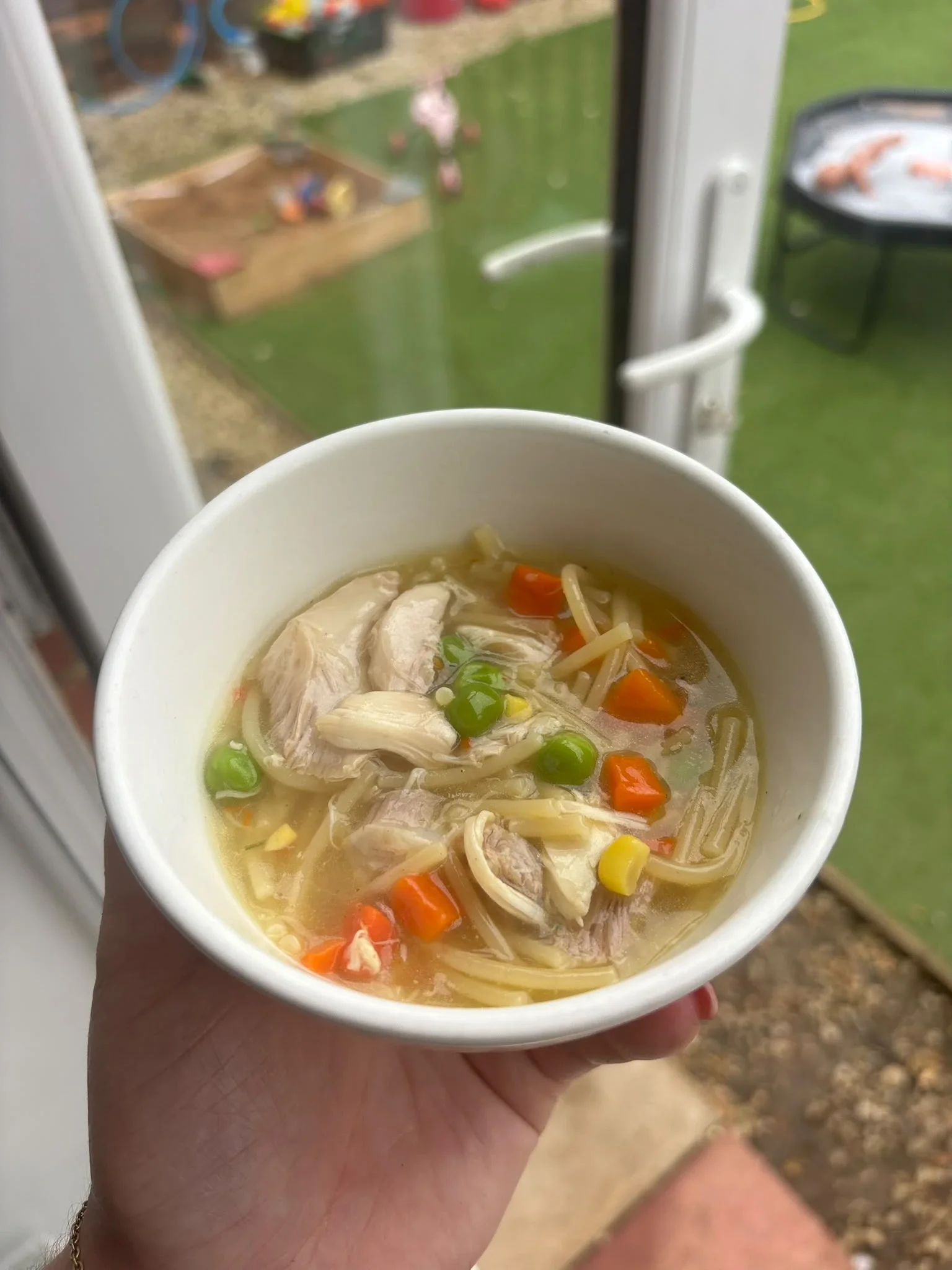
Portions are offered as a starting amount rather than something a child is expected to finish. Children are never pressured to clear their plate, and staff recognise and respond to individual hunger and fullness cues. Portions may be adapted according to a child's age, appetite, development and individual dietary requirements, and food is always prepared and served in a way that minimises choking risk.
As a guide, suggested starting portions increase gradually between ages 1 to 2 and 3 to 4, for example around 30 to 40g of cooked meat or fish for a 1 to 2 year old compared with 40 to 50g for a 3 to 4 year old, with similar gradual increases across vegetables, starchy carbohydrates and dairy. These are starting points only, and your child's key person can talk you through how portions are adapted for your child specifically.
Snacks and drinks
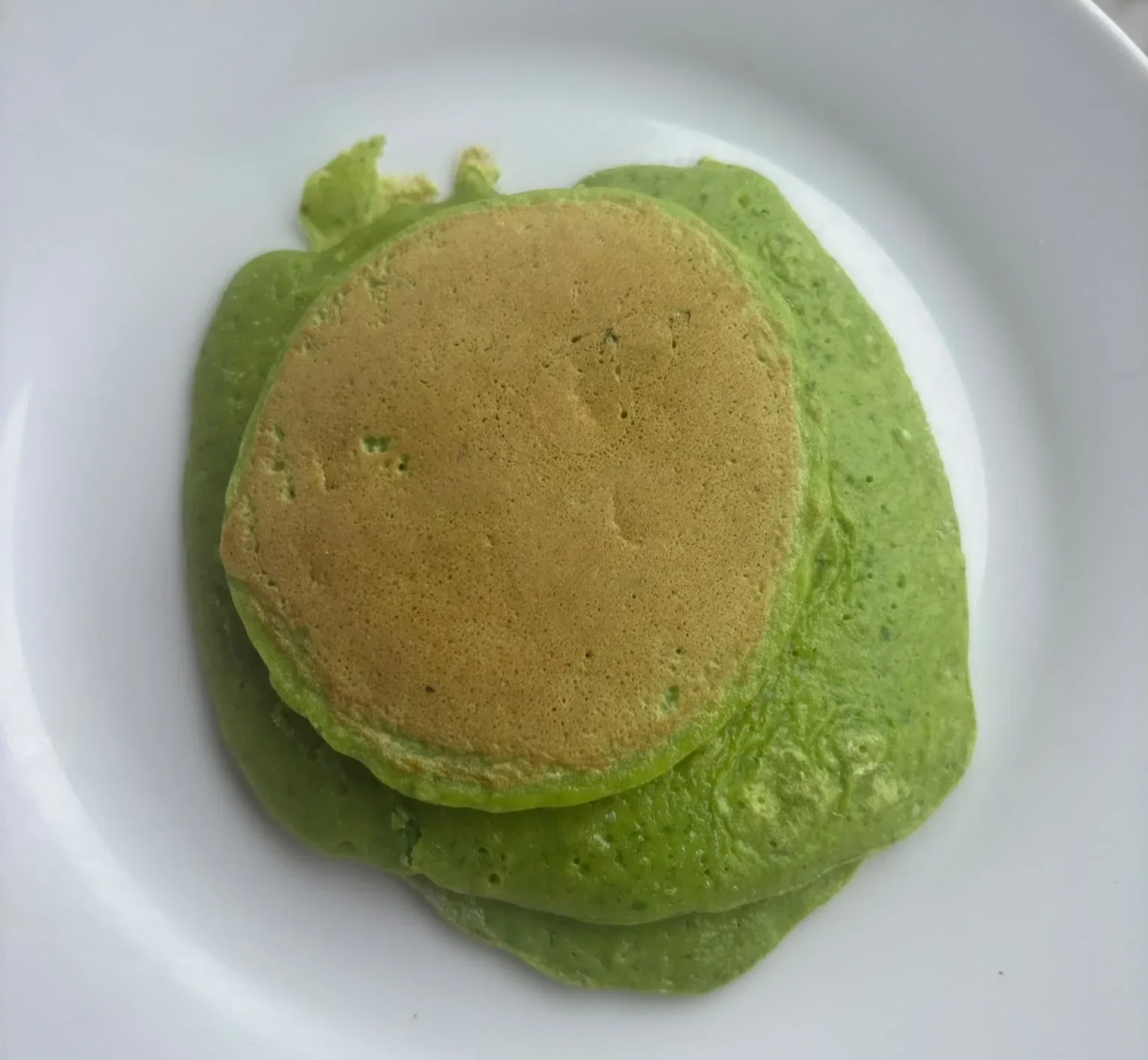
Snacks are planned as part of our nutritionally balanced daily menu rather than as an afterthought, and are based primarily around fruit and vegetables, starchy foods and dairy foods, with variety offered across the four-week cycle. Fresh fruit and vegetables are offered daily. Cakes, biscuits, chocolate, confectionery and other high-sugar snack foods do not form part of our routine snack menu.
Water is freely available throughout the day and offered with meals. Milk can be offered as part of snack provision where appropriate, using whole milk for children aged 1 to 2, while children aged 2 and over can have semi-skimmed milk provided they are eating and growing well.
How we reduce food waste
Reducing food waste is part of how we plan our menu. Ingredients are deliberately shared between meals within each week rather than being bought for a single recipe. Vegetables, proteins and sauces are batch prepared and safely incorporated into another planned meal, and frozen or store-cupboard vegetables, pulses and fish are used alongside fresh produce so that quantities can be adjusted according to attendance. End-of-week meals such as soups, frittatas, pies and bubble and squeak are deliberately planned to use up suitable surplus ingredients. Food is only reused where it has remained uncontaminated and has been cooked, cooled, labelled and stored safely in line with our food-safety procedures, and food that has already been served to a child is never reused.
Allergies, intolerances and individual dietary needs
Food is prepared and served taking account of allergies, intolerances and individual dietary requirements alongside each child's developmental needs. If your child has an allergy, intolerance, or any other dietary requirement, please speak to the nursery team directly so this can be recorded and planned for properly. This article describes our general approach and sample menu rather than individual dietary arrangements, which are always confirmed with you and the nursery team.
Curious what mealtimes actually look like day to day? Book a nursery visit and our team can show you around, including at mealtimes where possible.
Real meals from our kitchen
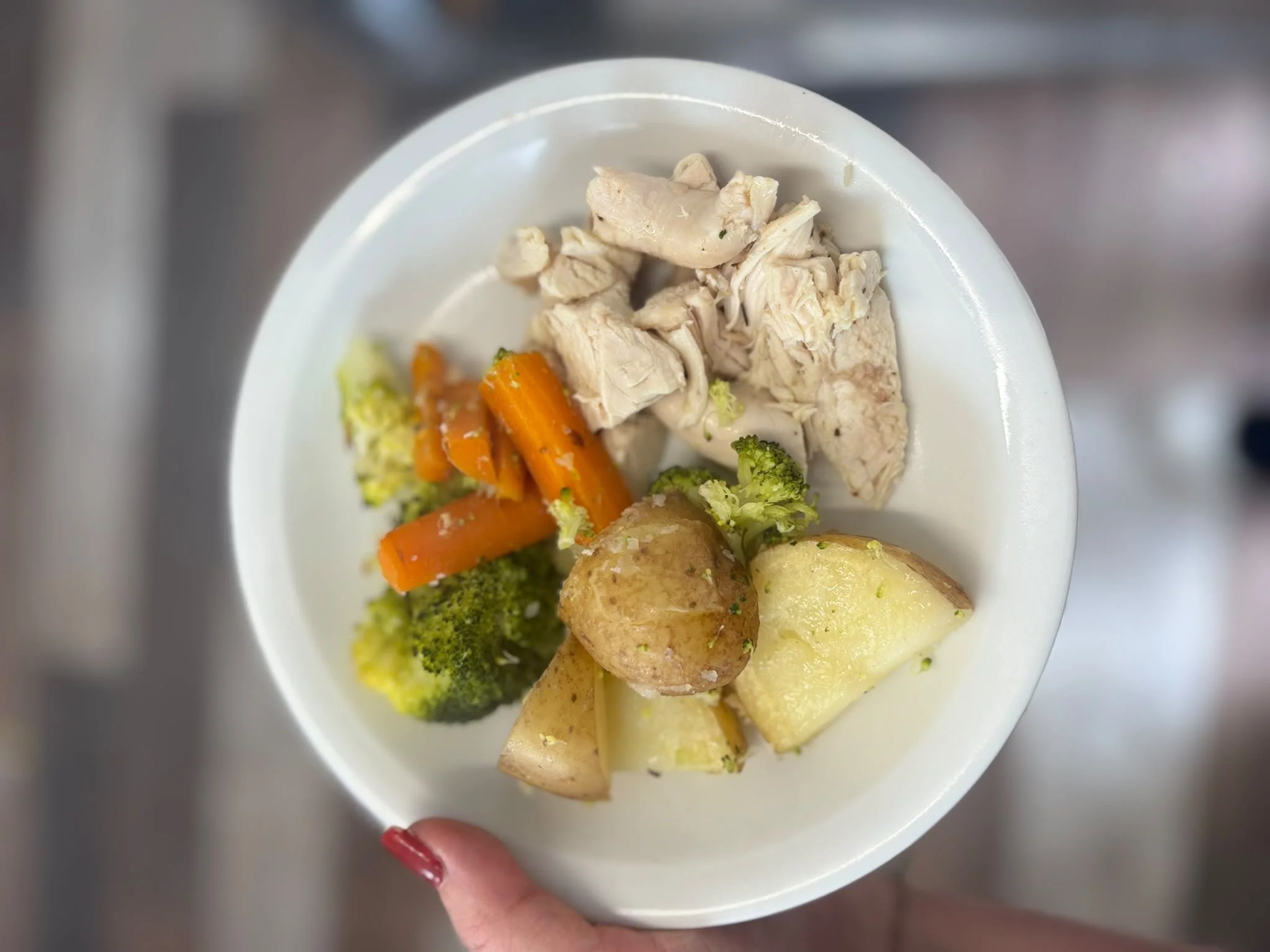
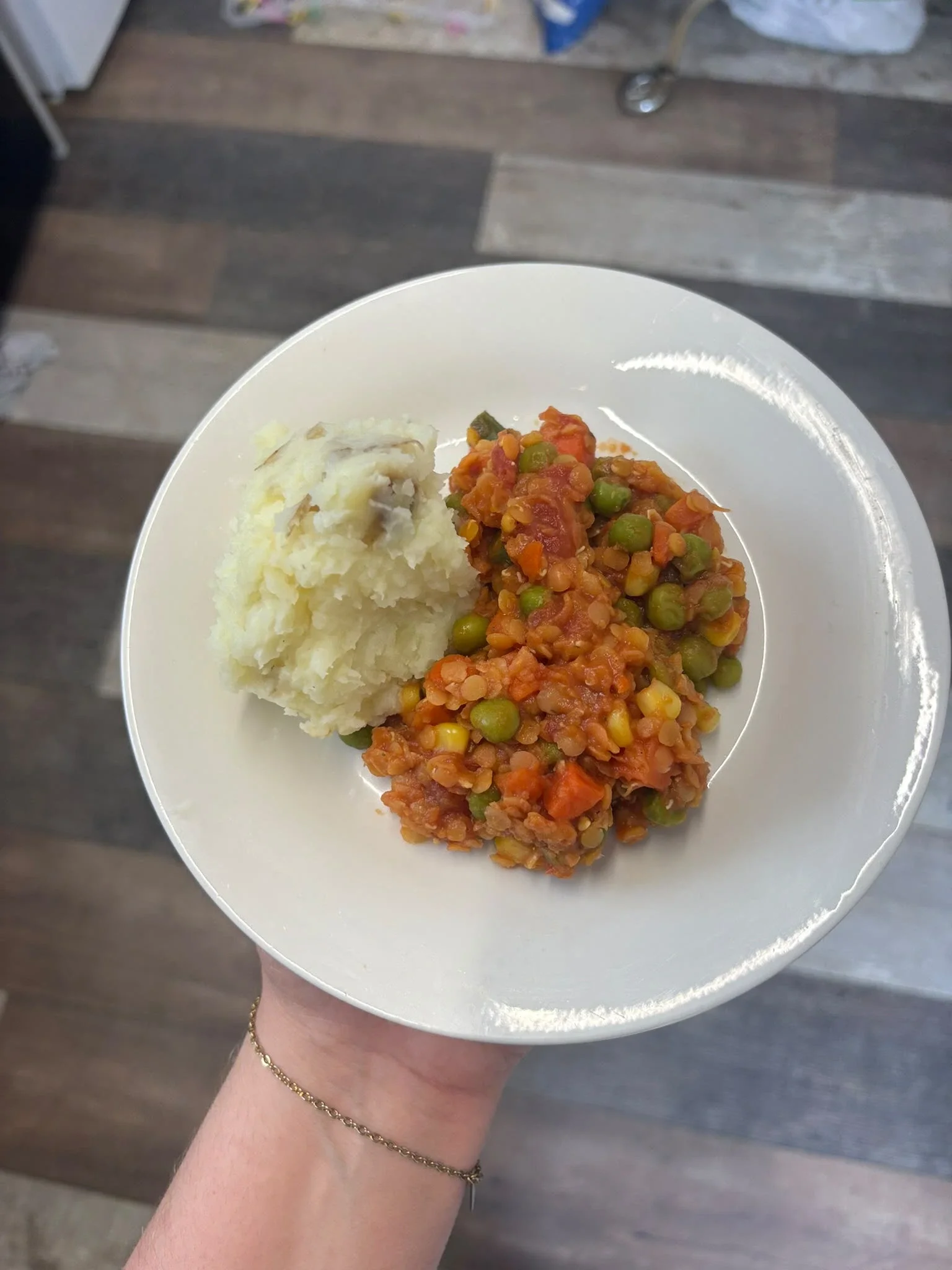
The photos through this article are genuine meals served at our settings, not styled stock photography. You will notice simple, home-cooked style plates, such as a lentil and vegetable dish served with mashed potato, or a chicken dinner with roasted vegetables and new potatoes, reflecting the kind of meals your child will actually be offered.
Visiting Wellingborough or Irchester
Every setting has its own kitchen routine, but the same nutritional approach and four-week menu structure applies across both of our nurseries. If you would like to know more about meals, allergies, or how a specific day's menu works at our Wellingborough nursery or our Irchester nursery, our team is always happy to talk this through, whether that is during a visit or once your child has started with us. Parents of younger children may also find our article on baby room and baby care at Wellingborough and Irchester useful, as it covers food for younger children in more detail.
Good food is a quiet but important part of a child's day at nursery. Planning meals that are genuinely balanced, varied and low in unnecessary salt and sugar, while keeping portions appropriate and flexible to each child, takes real thought behind the scenes. We hope this gives you a clearer picture of what that looks like at Pop-Up, and we are always glad to talk it through further in person.
Visit Our Wellingborough Nursery
Flexible childcare for children aged 6 months to 5 years, with freshly prepared meals planned around EYFS nutrition guidance.
Book a visit Join our waiting listOur menu is planned with regard to the Department for Education's EYFS nutrition guidance, balancing starchy carbohydrates, fruit and vegetables, dairy and a varied range of protein sources. Meals are prepared without unnecessary added salt and served in age-appropriate portions and textures.
Food is prepared and served taking account of allergies, intolerances and individual dietary requirements. If your child has a specific need, please speak to the nursery team directly so it can be recorded and planned for properly.
Our menu runs on a four-week rotating cycle, so children are offered a varied range of meals across each cycle while ingredients are shared sensibly between meals to reduce waste.
The same nutritional approach and four-week menu structure applies across both of our nurseries. For specific details about a particular day, our team at either setting can confirm this for you.
Yes. Water is freely available throughout the day and offered with meals. Milk is offered as part of snack provision where appropriate, using whole milk for children aged 1 to 2 and semi-skimmed milk for children aged 2 and over who are eating and growing well.
Yes. Our team can talk you through the full menu, including allergy information and portion sizes, during a nursery visit or once a place has been offered.
