
Keep your child at home if they have a high temperature (38C or more), have had sickness or diarrhoea in the last 48 hours, or are too poorly to play. At Pop Up, children can come back once they've been free from a temperature for 24 hours, 48 hours after their last bout of sickness or diarrhoea, and 48 hours after their first dose of any antibiotics. A runny nose or a mild cough on its own is usually fine.
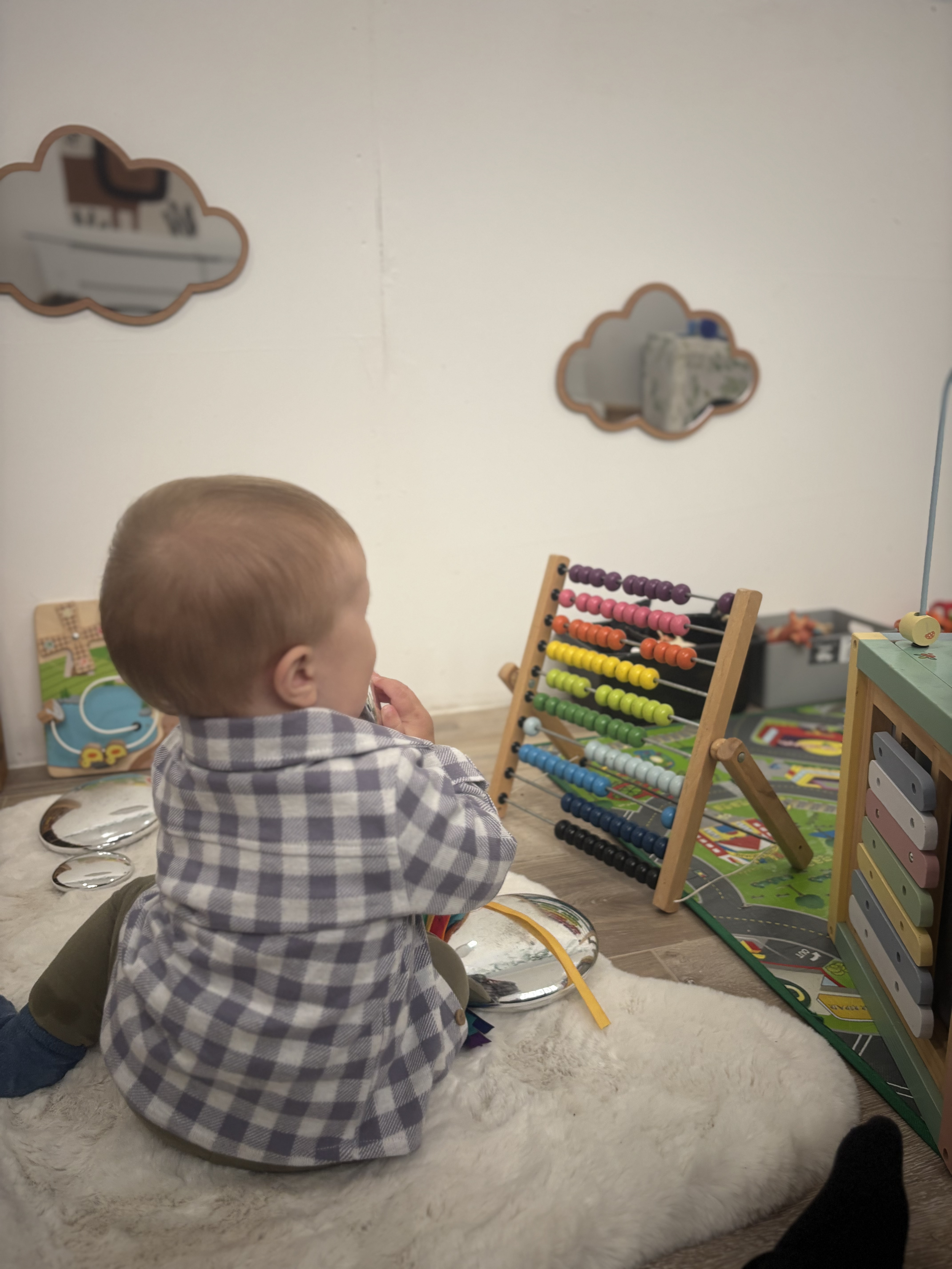
It's 6.45am. Your little one is a bit warm, a bit grizzly, and you're due at work by nine. Is it a nursery day or a sofa day?
Every parent knows that wobbly moment, and winter brings it round again and again. Colds, tummy bugs and mystery rashes travel fast when little ones share toys, snacks and cuddles. That's completely normal, and it's part of how young immune systems learn.
This guide brings together the official NHS and government advice with Pop Up's own illness rules, so you can make the call quickly and calmly. It isn't a replacement for medical advice, but it should take the guesswork out of most mornings.
The 3-question morning check
Before you pack the nursery bag, ask yourself three things:
Do they have a high temperature? The NHS counts 38C or more as a high temperature in children. If the answer is yes, they stay at home, whatever else is going on.
Could they pass it on? Sickness, diarrhoea, chickenpox and some rashes spread quickly in a nursery room. Check the table below for the most common ones.
Are they well enough to play? Nursery days are busy and full of activity. If your child would be happier curled up on the sofa than building towers, home is the kinder place to be.
If the honest answer to all three is "no, they're fine", they can usually come in. Still not sure? Give us a ring before you set off and we'll talk it through with you.
Common winter illnesses: when can my child come back?
The table below puts the government's official exclusion periods side by side with Pop Up's rules. In a few places we ask for a little longer than the minimum. Babies and toddlers share toys, food and close cuddles all day long, so a bit of extra time at home helps protect everyone in the room, including the youngest babies.
| Illness | Government guidance | At Pop Up |
|---|---|---|
| High temperature (38C or more) | Stay away until better and no longer have a temperature | Stay home until free from a temperature for 24 hours |
| Coughs and colds | Can attend with mild symptoms | Welcome if they're otherwise well and have no temperature |
| Diarrhoea and vomiting | Stay away until 2 days after it has stopped | Stay home for 48 hours after the last bout |
| Flu | Stay away until better and no longer have a temperature | Free from a temperature for 24 hours and well enough to play |
| COVID-19 | Stay away if more than mild symptoms, such as a high temperature | After a positive test, try to stay home for 3 days |
| Chickenpox | Stay away until 5 days after the rash first appears | Follows the government guidance |
| Conjunctivitis | No exclusion needed | A short time at home so treatment can start working |
| Impetigo | Until the blisters have scabbed, or 2 days after starting antibiotics | A short time at home, and 48 hours after the first dose of antibiotics |
| Scarlet fever | Stay away until 24 hours after starting antibiotics | Stay home until 48 hours after the first dose of antibiotics |
| Hand, foot and mouth | No exclusion needed | Can come in if they're well enough to join in |
| Head lice | No exclusion needed | Can come in. If we spot lice, we'll tell you quietly at pick-up |
| Any illness treated with antibiotics | Depends on the illness | Stay home until 48 hours after the first dose |
Government guidance: UK Health Security Agency exclusion periods, updated September 2026. Pop Up rules: our Illness and Accidents and Medication policies.
Pop Up's illness rules, explained
The 24-hour temperature rule. If your child is sent home with a temperature, or has been off with one, they need to be free from a temperature for a full 24 hours before coming back. A child with a high temperature stays at home in every case, even if they seem cheerful.
The 48-hour sickness rule. Any vomiting, or two or more loose stools, means 48 hours at home after the last bout. It can feel like a long time when they're bouncing around by teatime, but tummy bugs such as norovirus are still catching for a couple of days after the symptoms stop.
The 48-hour antibiotics rule. If a GP prescribes penicillin or any other antibiotic, your child can come back 48 hours after the first dose. For some illnesses this is a little longer than the government minimum. It gives the medicine time to start working and gives your little one time to rest.
Medicine at nursery. We only give prescription medicine, and only with your written permission on Famly. The pharmacy label needs to show your child's name, the date, the medicine and the dose. We don't give non-prescription medicines such as Calpol or Nurofen.
Bumps and accidents at home. Let us know in writing about any injuries that happen at home, so we can keep a gentle eye on them. A quick message on Famly is fine.
You can read the details in our Illness and Accidents Policy and Medication Policy, along with all our other policies on the Policies page.
Questions about how we keep little ones well?
Come and see us in Wellingborough or Irchester. Meet the team, see the rooms and ask us anything, from our illness policy to daily hygiene routines.
What happens if your child becomes unwell at nursery?
If your child becomes poorly during the day, we'll call you straight away and ask you to collect them. We'll keep them comfortable until you arrive, and we'll let you know what we've noticed so you can decide on next steps.
Make a sick-day plan now
Winter bugs rarely arrive at a convenient moment. Ten minutes of planning now can save a lot of stress later:
Check your contact details. Make sure we have your up-to-date numbers and know who else can collect your child if you can't.
Line up a back-up. A grandparent, friend or partner who can step in at short notice is worth their weight in gold in January.
Know your rights at work. Employees are allowed reasonable time off to deal with an emergency involving a dependant, such as arranging care when a child falls ill. Your employer doesn't have to pay you for it, so check your contract. Read the GOV.UK guidance.
Stock the cupboard. Keep a thermometer and children's paracetamol at home, and always check the dose for your child's age on the packet.
Tell us early. If your child will be off, let us know as soon as you can through Famly or by phone, and tell us what the illness is. It helps us keep an eye out for symptoms in other children.
How to keep bugs at bay this winter
You can't stop every cold, but a few simple habits make a real difference:
Book the children's flu vaccine. The NHS offers it every autumn and early winter to children aged 2 or 3 on 31 August 2026, which means those born between 1 September 2022 and 31 August 2024. For most children it's a quick nasal spray, not an injection. Ask your GP surgery, and find out more on the NHS website.
Make handwashing fun. Sing a song while they scrub, so they wash for long enough. Before meals, after the toilet and after playing outside are the big three.
Catch it, bin it. Teach little ones to cough into a tissue or their elbow, and pop used tissues straight in the bin.
Keep up good routines. Good sleep, healthy, regular meals and plenty of time outdoors all help little ones feel their best.
Dress in layers. A vest, a jumper and a waterproof coat mean they can stay warm in the garden and comfortable indoors.
When to get medical help
Most winter bugs pass with rest, fluids and lots of cuddles. But you know your child best, so always trust your instincts. The NHS advice on high temperatures in children says:
Contact your GP or NHS 111 if your child is under 3 months old with a temperature of 38C or more, or 3 to 6 months old with a temperature of 39C or more. Also get advice if a high temperature has lasted 5 days or more, if they have a rash as well as a temperature, if they aren't eating or don't seem themselves, or if they show signs of dehydration, such as nappies that aren't very wet.
Call 999 if your child has a rash that doesn't fade when you press a glass against it, a stiff neck, a fit for the first time, unusually cold hands and feet, or blue, grey or blotchy skin or lips, or if they are very drowsy and hard to wake.
This guide is for general information only. If you're ever worried about your child, speak to a health professional.
Frequently asked questions
Can my child go to nursery with a cold?
Yes, as long as they only have mild symptoms such as a runny nose or a slight cough, have no temperature and are well enough to play.
How long should my child stay off nursery after a temperature?
At Pop Up, your child needs to be free from a temperature for 24 hours before coming back. A child with a high temperature should stay at home in every case.
What counts as a high temperature in a child?
The NHS says a high temperature in a child is 38C or more.
How long after sickness and diarrhoea can my child go back to nursery?
Your child should stay at home until 48 hours after their last bout of sickness or diarrhoea. This matches the government guidance of 2 days.
Can my child go to nursery on antibiotics?
At Pop Up, your child can come back 48 hours after their first dose of antibiotics, as long as they're well enough to join in.
Can my child go to nursery with conjunctivitis?
Government guidance says no exclusion is needed. At Pop Up, we ask for a short time at home so treatment can start working.
When can my child go back to nursery after chickenpox?
Government guidance says children should stay away until 5 days after the rash first appears. The NHS adds that all the spots should have crusted over.
Can my child go to nursery with hand, foot and mouth?
Yes, if they feel well enough. Government guidance says no exclusion is needed for hand, foot and mouth disease.
Will the nursery give my child Calpol?
No. Pop Up only gives prescription medicine, with your written permission on Famly. We don't give non-prescription medicines such as Calpol or Nurofen.
What happens if my child becomes ill at nursery?
We'll call you straight away and ask you to collect your child. We'll keep them comfortable until you arrive.
Do I need to tell the nursery if my child is off sick?
Yes. Let us know as early as you can through Famly or by phone, and tell us what the illness is so we can look out for symptoms in other children.
Can I take time off work when my child is ill?
Employees are allowed reasonable time off to deal with an emergency involving a dependant, such as arranging care when a child falls ill. Your employer doesn't have to pay you for it. See the GOV.UK guidance.
Can nursery-age children have the flu vaccine?
Yes. The NHS offers the children's flu vaccine to children aged 2 or 3 on 31 August 2026. For most children it's a quick nasal spray, available from your GP surgery. Find out more on the NHS website.
Where can I read Pop Up's illness policy?
You can read our Illness and Accidents Policy and Medication Policy on the Policies page of our website.
Warm, caring nursery days, all winter long
Book a free showaround, meet the team and see how we look after little ones through the colder months. No pressure, just a warm welcome.
Wellingborough
178 Finedon Road, NN8 4AH
A calm, smaller setting with a big garden at the heart of every day.
Irchester
Village Hall, NN29 7AW
Outdoor learning in all weathers, graded Strong standard by Ofsted and one of the UK's Top 20 nurseries.
Or email us at info@popupdaynursery.com
Useful links and sources
This guide is based on official NHS and government advice. Check these pages for the latest details:
